Yes. They’re normally made to fit your doorway, so you get a neat finish without gaps.
Architectural Aluminium Mats: The Smart Way to Protect Your Entrance
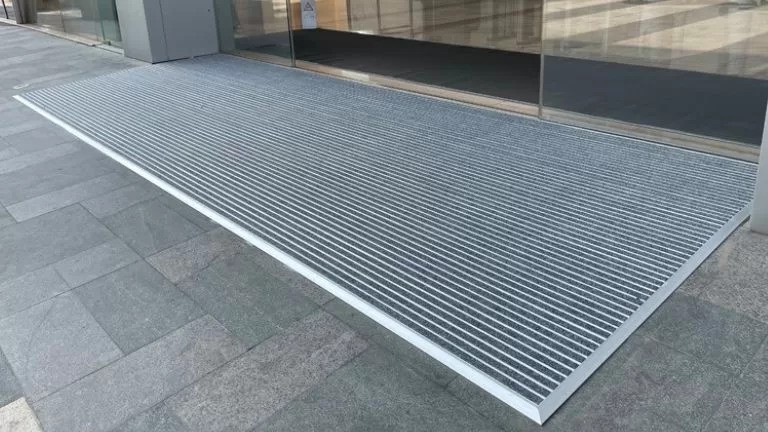
Walk into any busy office block, clinic or shopping centre and look down at the entrance. The first thing your shoes meet is a mat. A good one goes unnoticed. A bad one shows up as muddy footprints, curling edges and a puddle by the door. That’s why more facility managers are choosing architectural aluminium mats, a built-in system that handles heavy traffic without constant replacing or fussing.
What Are Architectural Aluminium Mats and How Do They Work?
Unlike a loose rug, an architectural mat is fitted into a recessed frame set into the floor, so it sits flush with the surrounding surface. Aluminium rails hold the inserts in place. These can be carpet, rubber, or brush strips, depending on what your entrance needs to deal with.
Because the mat doesn’t sit on top of the floor, nothing slides and nothing catches a toe. The scraper strips lift off grit, the carpet sections soak up moisture, and the dirt falls into the well below instead of being carried deeper into your building. It’s a simple idea, and it works.
Where Do They Make the Most Sense?
Anywhere people come and go all day. Hotels, hospitals, schools, airports, shopping centres and office lobbies are the usual homes for these systems. In places like Johannesburg, where summer storms can turn an entrance into a slip hazard within minutes, a fixed mat that traps water is a real safety upgrade.
Most people think of entrance mats as something you throw down and replace every year or two. Aluminium systems change that. Because the frame is fixed and the inserts are separate, you swap out only the worn sections instead of tearing up the whole thing.
Branding is another benefit. If you want your company name to greet visitors, you can pair a recessed system with logo mats in the reception area, so the practical side and the professional look work together.
What Should You Check Before You Buy?
A few questions will save you money and headaches later:
- How heavy is the foot traffic? A small boutique and a busy hospital need very different profiles.
- Is the area indoors or outdoors? Outdoor doorways usually need tougher scraper inserts.
- Is there already a recess? If not, a contractor will need to create one, so plan that early.
- Who will clean it? Lift-out inserts make life easier for cleaning staff.
Measure your doorway carefully and think about the weather, too. A mat that suits a sheltered lobby may struggle at an exposed front door.
It also pays to look at the long game. Choosing high-quality matting solutions costs a little more at the start, but cheaper mats tend to curl, fade and flatten quickly. A well-made aluminium system can run for years with only minor upkeep.
Not sure which profile or insert fits your doorway? Call the team on +27(68)661-2284 and talk through your measurements and foot traffic. A short conversation usually clears things up faster than hours of browsing.
Final Thoughts
Architectural aluminium mats aren’t glamorous, but they quietly protect your floors, keep your visitors safe and make a solid first impression. If your current entrance is struggling with dirt, water or worn-out mats, a fitted system is worth serious thought. For advice, custom sizing and a range built for South African conditions, The Mat Group SA is a good place to start.
Most architectural mats are designed to sit in a recessed well so they finish flush with the floor. Surface-mounted options with ramped edges also exist for areas where recessing isn’t possible.
Vacuum or brush the surface regularly, and lift out the inserts now and then to clear the dirt trapped underneath.
Popular Posts
Is it Worthwhile to spent money on branded mats
November 6, 2025
Can Branded Logo Mats Really Enhance Business Visibility?
February 10, 2026
How Coir Logo Doormats Improve Cleanliness and Reduce Maintenance Costs
February 17, 2026
5 Ways Custom Rubber Mats Improve Safety in Commercial Kitchens
February 23, 2026
Leave a Reply