How Anti-Fatigue Mats Improve Employee Comfort and Productivity
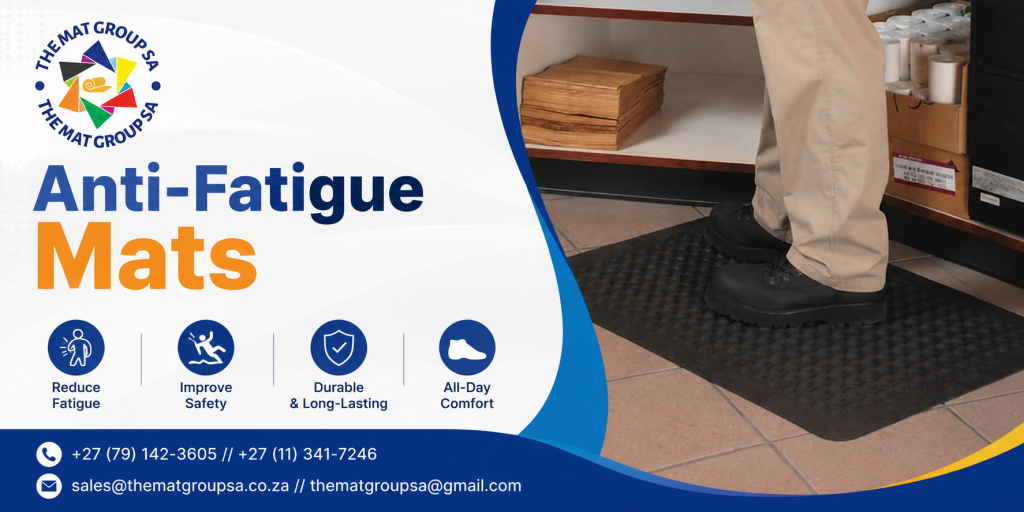
If your team spends most of the day on their feet, you’ve probably noticed the toll it takes by mid-afternoon. Sore backs, tired legs, and that general drag in energy aren’t just annoying — they quietly chip away at how much work gets done. This is exactly where anti-fatigue mats step in. They’re built to cushion standing workers against hard floors, and businesses that add them to production lines, checkout counters, and workstations often see a real difference in both comfort and output.
It sounds like a small change, but the science behind it makes sense once you think about it. Standing on concrete or tile for hours forces your muscles to constantly make tiny adjustments to keep you balanced and stable. Over a full shift, that adds up to real fatigue. A good mat introduces a slight give underfoot, which encourages small movements in your leg muscles and keeps blood flowing properly. The result is less strain on your joints and a noticeably lower chance of that heavy, achy feeling by the end of the day.
Why Anti-Fatigue Mats Matter More Than People Think
It’s easy to dismiss floor mats as a minor detail in workplace design, but the impact on staff wellbeing is bigger than most people expect. Employees who aren’t fighting constant discomfort tend to stay focused longer, make fewer mistakes, and take fewer breaks just to relieve pressure on their feet. Over weeks and months, this steady improvement in comfort translates into fewer sick days related to musculoskeletal complaints and a more consistent pace of work. For employers, that’s a return on investment that’s hard to ignore, especially in industries like manufacturing, warehousing, retail, and food service where standing is unavoidable.
There’s also a safety angle worth mentioning. Many anti-fatigue mats come with slip-resistant surfaces, which helps reduce the risk of workplace falls, particularly in areas prone to spills or moisture. Combining comfort with safety in one product is part of why these mats have become a standard fixture in so many commercial and industrial settings.
Choosing the Right Mat for Your Workspace
Not every anti-fatigue mat is designed the same way, and picking the right one depends on your environment. Thickness, material, and surface texture all play a role. A kitchen or food prep area might need something grease-resistant and easy to hose down, while a manufacturing floor might call for a heavier-duty rubber build that can handle rolling carts and machinery. It’s worth thinking about foot traffic patterns too, since high-movement zones benefit from mats with beveled edges that reduce tripping hazards.
Beyond the factory floor, businesses often extend the same thinking to the rest of their space. Reception areas and hallways benefit from well-placed entrance mats that trap dirt and moisture before it spreads further into the building, keeping floors cleaner and safer for everyone walking through. Retail stores, offices, and restaurants frequently pair these with commercial mats designed for heavier daily use, since these spaces deal with constant footfall from both staff and customers. And for businesses wanting to reinforce their brand at the same time, custom logo mats printed with a company name or logo add a professional touch right at the door, turning a functional item into a small marketing tool.
Getting this mix right isn’t complicated, but it does help to talk to people who understand flooring solutions for different industries. A quick chat can save you from buying the wrong product for your space, or worse, replacing a mat that wears out too quickly under conditions it wasn’t built for.
If you’re ready to give your team a more comfortable place to work, or you simply want advice on what would suit your floors best, don’t hesitate to contact us and talk through your options with someone who knows the products inside and out. Investing in the right matting setup is a small step that pays off in a happier, healthier, and more productive workforce, and it’s exactly the kind of practical solution The Mat Group SA has been helping businesses across South Africa get right for years.
Yes, many users report reduced lower back and leg discomfort since the mats encourage subtle muscle movement that improves circulation and reduces pressure on joints.
Many models come with slip-resistant surfaces and drainage designs specifically made for wet or greasy areas like kitchens and washdown zones.
Most mats can be cleaned with regular sweeping or vacuuming, followed by a wipe-down or hose-off with mild soap and water, depending on the material.
Popular Posts

November 6, 2025
February 10, 2026
February 17, 2026
February 23, 2026
Leave a Reply