How Outdoor Rubber Scraper Mats Improve Workplace Safety During Wet Weather
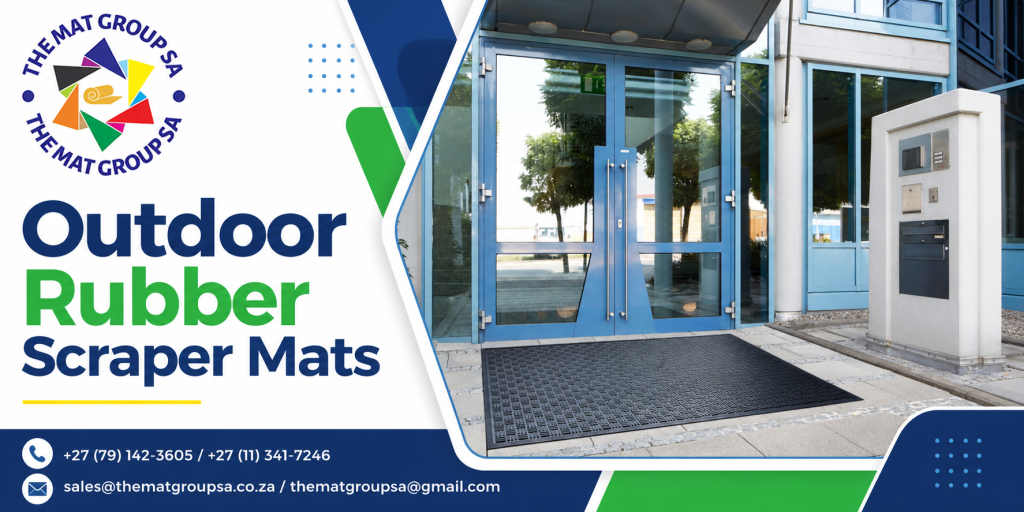
Rain is great — until someone slips through your front door and ends up on the floor. Wet weather brings with it a very real and very underestimated hazard: slippery entrances. Whether it’s a light drizzle or a heavy downpour, water tracked in from outside turns smooth floors into skating rinks. The good news? It’s a problem that’s surprisingly easy to solve. Outdoor rubber scraper mats are one of the most practical, cost-effective tools a business can invest in to keep both employees and visitors safe when the weather turns.
Why Outdoor Rubber Scraper Mats Are a Wet-Weather Essential
When people walk in from outside on a rainy day, they bring everything with them — water, mud, grit, leaves, you name it. Standard floor coverings just aren’t built to handle that kind of assault. Rubber scraper mats, on the other hand, are specifically engineered for it.
The defining feature is the raised moulded cleats on the surface. These aren’t just decorative — they physically scrape the underside and edges of footwear as people walk across the mat. That means the bulk of the mud and moisture gets removed before a single step is taken indoors. It’s a simple mechanism, but in terms of preventing slips, it’s remarkably effective.
What also sets rubber scraper mats apart from fabric alternatives is their material. Made from 100% nitrile rubber, they’re resistant to grease, oil, and solvents — not just water. That makes them particularly valuable in industrial or commercial settings where the floor hazards go beyond the occasional rainy afternoon.
The Real Cost of Ignoring Wet Floor Hazards
Slip-and-fall accidents are among the most common workplace injuries — and they’re also among the most preventable. The financial and human cost of a single serious fall can far outweigh the investment in a quality entrance mat system. Think about lost productivity, potential liability, damage to staff morale, and the simple disruption of having someone hurt on your premises.
Beyond the numbers, there’s also a cultural dimension. Businesses that visibly prioritise safety — even in small ways — communicate something important to the people who work there and visit. A clean, dry, well-matted entrance sends a clear signal that this is a professional, well-managed space.
Rubber scraper mats also hold up well under pressure. A bevelled, anti-trip border means the mat lies flat and doesn’t curl at the edges over time, which is a common failure point with cheaper alternatives. Wheelchairs, prams, and trolleys can roll over them without catching — a detail that matters in high-traffic commercial environments.
Versatility That Goes Beyond the Front Door
One of the more surprising things about rubber scraper mats is just how many places they work well. Yes, they’re designed for outdoor use — but they’re equally at home in indoor wet zones like changing rooms, kitchens, laundry areas, and in front of industrial beverage machines or production equipment. Anywhere water or grime is a regular part of the environment, these mats earn their keep.
They’re also worth considering from an anti-fatigue perspective. Staff who stand for extended periods on hard floors — in a kitchen, a production line, a retail counter — benefit from the slight cushioning that a quality rubber mat provides. It’s a dual-purpose win: safety and comfort in one product.
If you’re already thinking about your entrance areas, it’s also worth exploring branded options like logo mats, which combine the functional protection of a quality entrance mat with a professional, branded first impression for anyone walking through your doors.
What to Look for When Choosing a Rubber Scraper Mat
Not all rubber mats are created equal. Here’s what actually matters when making a selection:
Material quality — Look for 100% nitrile rubber. It handles grease, oil, and temperature extremes far better than synthetic blends.
NFSI certification — High-traction certification from the National Floor Safety Institute is the gold standard for slip resistance. Don’t settle for vague claims.
Depth and cleat design — Mats that are too shallow won’t scrape effectively. A depth of around 5–6mm with well-spaced cleats tends to perform best.
Ease of cleaning — A mat that’s a nightmare to maintain won’t stay clean, and a dirty mat isn’t doing its job. Look for options that can be pressure washed or machine washed.
Border construction — A bevelled rubber border prevents curling and trip hazards, and allows wheeled traffic to pass over smoothly.
A Small Investment, A Big Safety Return
Wet weather is coming — it always does. The question is whether your workplace is ready for it. A quality rubber scraper mat at every exterior entrance is one of the simplest, most affordable interventions you can make to dramatically reduce slip risk and keep your space cleaner and safer year-round.
If you’d like guidance on the right mat solution for your specific space, contact us at The Mat Group SA. With over 14 years of experience supplying businesses across South Africa, the team is well-placed to help you find exactly what you need — whether it’s a single entrance mat or a full building fitout.
Yes. Because they’re made from 100% nitrile rubber, these mats are resistant to grease, oil, and solvents — making them a solid choice for factories, warehouses, and workshops where standard entrance mats simply wouldn’t hold up. They’re built to take a beating without cracking, curling, or losing their grip.
A regular doormat is mostly fabric-based and designed to absorb moisture. A rubber scraper mat goes a step further — the raised moulded cleats physically scrape dirt and debris off the soles of shoes before anyone steps inside. In wet or muddy conditions, that scraping action makes a significant difference in how much mess actually gets tracked indoors.
A quality nitrile rubber mat stays firmly in place thanks to its weight, flexibility, and non-slip rubber backing. The bevelled border also helps it lie flat against the floor without curling at the edges over time — which is a common problem with lighter, cheaper mats. Even in high-footfall areas, it should hold its position without needing constant readjustment.
Popular Posts

November 6, 2025
February 10, 2026
February 17, 2026
February 23, 2026
Leave a Reply